
For years, Android users have had plenty of excellent phones to choose from, but the experience starts to feel a little less cohesive once you sit down at a laptop.
You can pair an Android phone with Windows, of course, and Microsoft has steadily improved Phone Link over the years. But it has never quite felt like the same tightly connected experience you get when using an iPhone alongside a MacBook. Googlebook could finally change that.
Google has officially opened pre-orders for Googlebook, its new premium laptop platform built on the Android technology stack while borrowing desktop foundations from ChromeOS. In Australia, Googlebook laptops will start from A$2,299 RRP and arrive in stores on 5 October.
And while there’s plenty to talk about when it comes to Gemini, processors and premium laptop hardware, I think the most interesting part of Googlebook is much simpler: Google is finally treating your Android phone and laptop as parts of the same ecosystem.
Android finally gets a proper laptop companion
Google describes Googlebook as “the laptop your Android phone has been waiting for”, and for once, the marketing line actually gets fairly close. Because Googlebook shares its foundations with Android, Google has built several cross-device features directly into the platform rather than simply adding another companion application on top.
For example, Quick Access lets you browse, search and insert files stored on your Android phone directly from the Googlebook file browser without manually transferring them first. Google is also building the experience around moving tasks and apps between devices, with an Android 17 or newer phone required for some of these cross-device features. That’s the kind of integration Android has been missing on laptops.
Apple has spent years making the boundaries between its devices increasingly invisible. You can start something on an iPhone and continue it on a Mac, access files across devices, answer calls and messages, or simply move between them without thinking much about what is happening behind the scenes. Apple devices work together and it’s the ecosystem that people love.
Googlebook appears to be Google’s attempt to build that same relationship around Android.
This isn’t just another Chromebook
It would also be easy to look at Googlebook and assume this is simply Google’s new name for an expensive Chromebook (while you’re here, check out our ASUS Chromebook Plus CX34 review)
Googlebook combines Android’s app ecosystem with ChromeOS technology designed for a desktop environment. Google says users will be able to run native applications including Adobe Photoshop, Lightroom and CapCut, alongside Android apps and games. There is also an isolated Linux environment with full terminal access for developers.
The first Googlebooks will come from manufacturers including ASUS, Dell, HP and Lenovo in Australia, using Intel Core Ultra Series 3 or Qualcomm Snapdragon X Elite processors. Every model starts with at least 16GB of RAM, while selected configurations reach 32GB. Google quotes up to 14 hours of local video playback or 16 hours of web browsing, depending on the model and usage.
So Google isn’t positioning these as the inexpensive Chromebooks many people associate with schools or basic web browsing. With Australian pricing starting at A$2,299, Googlebook is very clearly walking into premium Windows laptop and MacBook territory.
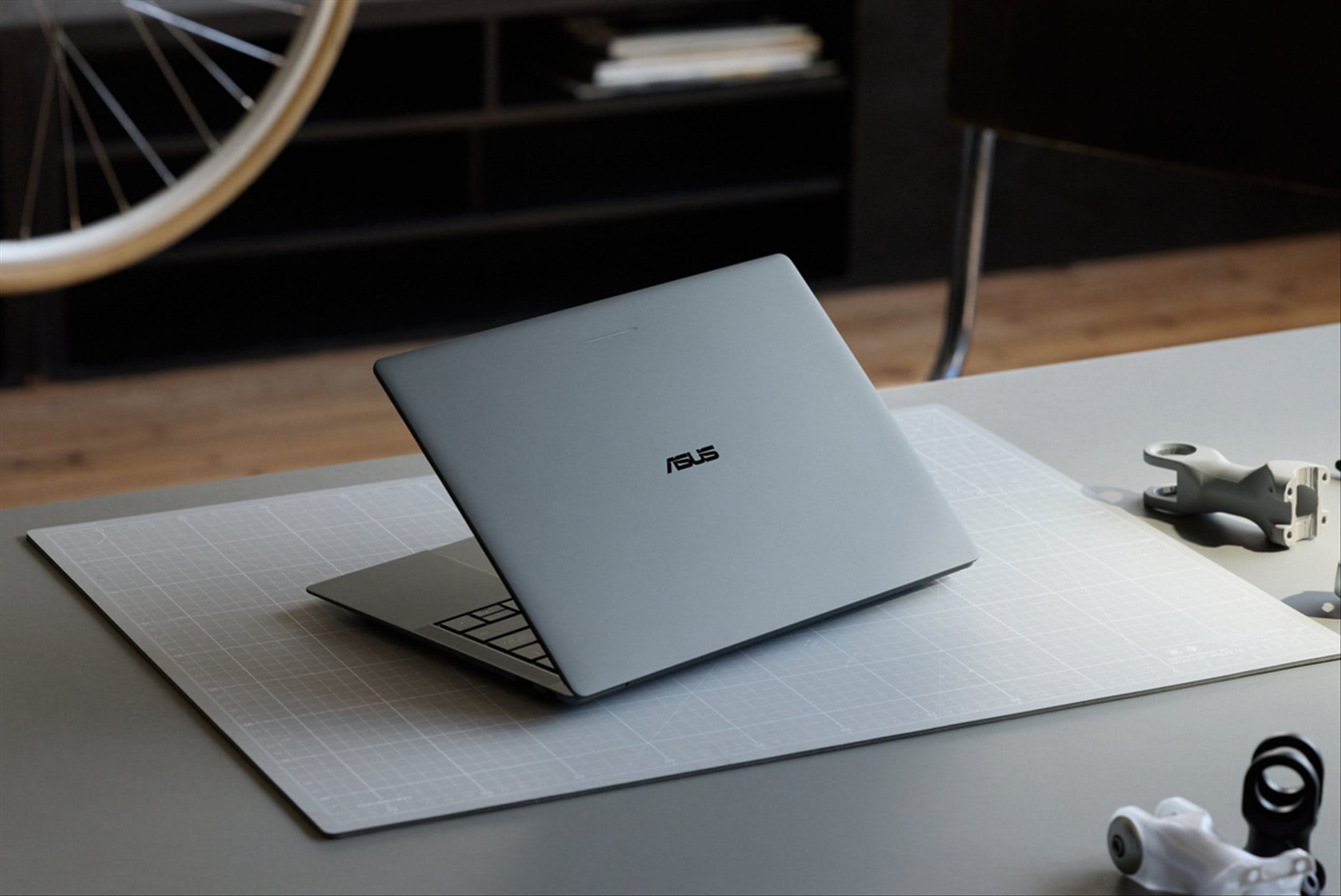
One of the first Googlebook models coming to Australia is the ASUS Googlebook 14, which will be available exclusively through JB Hi-Fi from 5 October. The 14-inch ultraportable weighs just 0.99kg and measures as little as 10.9mm thick, with a CNC-machined magnesium-aluminium chassis and a 3K 120Hz OLED touchscreen. Depending on the configuration, it comes with an Intel Core Ultra 5 or Core Ultra 7 Series 3 processor, 16GB of LPDDR5X memory, a 512GB PCIe 4.0 SSD, and a 70Wh battery rated for up to 18 hours of use. Connectivity is also quite generous for such a thin laptop, with two Thunderbolt 4 USB-C ports, two USB-A ports, HDMI 2.1, a 3.5mm audio jack, and Wi-Fi 7.
The ASUS Googlebook 14 is also built around Gemini Intelligence, including features such as Magic Pointer, which lets you select onscreen content and ask Gemini to work with it, as well as proactive suggestions based on what is currently displayed. Supported Android phones can hand tasks across to the laptop or cast phone apps to the larger screen, which ties directly into Google’s wider push for a more connected Android ecosystem. ASUS is bundling 12 months of Google AI Pro, including 5TB of cloud storage. In Australia, the Core Ultra 5 model is priced at A$2,799, while the Core Ultra 7 version costs A$2,999.
Gemini is important, but the ecosystem could matter more
Naturally, Gemini is everywhere. Googlebook has been designed around what Google calls Gemini Intelligence, with AI features integrated throughout the operating system rather than being limited to a standalone chatbot. Google is also bundling 12 months of Google AI Pro for eligible new subscribers with all Googlebooks, not just the ASUS ones.
Until now, buying a Pixel, Samsung Galaxy or another premium Android phone hasn’t really dictated what computer you should buy next. Windows is usually the obvious choice, but the phone and PC still fundamentally belong to different platforms. Googlebook changes that equation.
If the cross-device experience works as seamlessly as Google is promising, Android users may finally have a compelling reason to stay within Google’s ecosystem when moving from their phone to a laptop. And that could ultimately be far more important than another collection of AI features.
Apple’s biggest advantage has never simply been the MacBook or the iPhone individually. It’s how difficult it becomes to separate them once you’re comfortably using both. Google now appears to be building its own version of that relationship. Or the Ecosystem.
Whether Googlebook can genuinely deliver that level of integration is something we’ll need to see once the laptops reach users in October. But on paper, this feels like the first time Android users have been offered a laptop designed from the beginning to feel like an extension of their phone rather than another device that happens to connect to it.