

Australian summer means longer afternoons outdoors, weekend visitors and children asking to swim before breakfast. A backyard pool can make those days memorable, but it adds jobs that cannot be left until the next spare weekend. Leaves accumulate, equipment needs checking, and warm weather can change water conditions quickly.
The simplest approach is to separate safety, water quality and physical cleaning, then give each a realistic place in the household routine. With a few well-timed checks and a clear division of responsibility, pool care becomes easier to manage without confusing a tidy-looking pool with a safe one.

Start with the jobs that cannot be delegated to a machine
A sparkling surface is reassuring, but appearance is not a safety assessment. Before discussing cleaning gadgets or clever shortcuts, check the pool barrier, gate, water clarity and equipment. Royal Life Saving Australia recommends active adult supervision and a secure, self-closing and self-latching pool gate as separate layers of protection. A fence is no replacement for supervision, and neither is a pool cover or a swimming lesson.
Walk around the fence line at the start of the season and whenever the surroundings change. Move chairs, pot plants and outdoor storage boxes away from barriers if children could use them to climb. Test the gate from different positions: does it close and latch on its own, or can it rest partly open? If anything is damaged or does not meet local requirements, arrange a proper inspection or repair rather than relying on a family reminder.
Households with several adults sometimes assume someone else is watching. Assign one specific adult to supervise whenever children are near or in the water, and hand over that responsibility explicitly. A phone call, meal preparation or quick trip inside is enough to break attention. Keep rescue equipment accessible and make sure adults know how to respond in an emergency.
Build a summer pool-care routine around real life
The most useful schedule is one that can survive a busy workweek. Beatbot Australia is one source of automated cleaning equipment, but no machine replaces the family’s safety and water-testing routine. Instead of one exhausting clean on Sunday, divide checks into small tasks by frequency. The following is a planning example, not a substitute for the pool’s manual, a technician’s advice or local safety requirements.
Before anyone swims
Look through the water for clarity and visible debris, verify the barrier is secure, and check that the pool area is free of loose objects and trip hazards. Test the water using an appropriate kit and follow local public-health guidance, particularly in hot weather or after heavy use. Western Australia’s public-health guidance recommends checking pool chemical levels at least daily, more often in hot weather, with free chlorine and pH especially important.
After a windy day or a busy afternoon
Remove floating leaves and check skimmer baskets before debris becomes waterlogged. Look for dirt gathered in corners and around steps. If many people have been swimming, pay attention to water quality as well as visible mess. Never add pool chemicals while people are in the water; follow product instructions for dosage, circulation and safe re-entry.
Once a week and at seasonal changes
Review filter pressure or maintenance indicators, clean baskets and inspect equipment for leaks or unusual sounds. Check brushes, hoses, covers and any robotic cleaner you use. Revisit your care routine during pollen season, after storms and when children are home on school holidays; the same schedule will not fit every week of summer.

What a simple family checklist should include
A shared checklist prevents small tasks from disappearing between work, school and weekend plans. Keep it near the pool equipment or in a household note that adults can access. The objective is not to involve children in chemical handling; chemical testing, dosing and equipment repairs should remain with responsible adults or qualified professionals.
1. Check the gate, fence and supervision plan before pool time.
2. Test and record water quality as recommended for your pool and local conditions.
3. Empty visible leaves from the surface and inspect skimmer baskets.
4. Review the pool floor, steps and waterline for dirt or slippery build-up.
5. Run filtration and cleaning equipment according to their instructions.
6. Rinse and store cleaning tools safely, away from children.
7. Note anything needing professional attention, from damaged barriers to electrical faults.
Make the list actionable: ‘Monday—empty the skimmer basket’; ‘after strong wind—remove large leaves’; ‘before guests arrive—test the water and check the gate’. Record the water-test reading and the action taken, not just a tick. If a reading falls outside the recommended range, follow appropriate treatment instructions instead of guessing a chemical dose.
Choose cleaning tools for the debris your pool actually gets
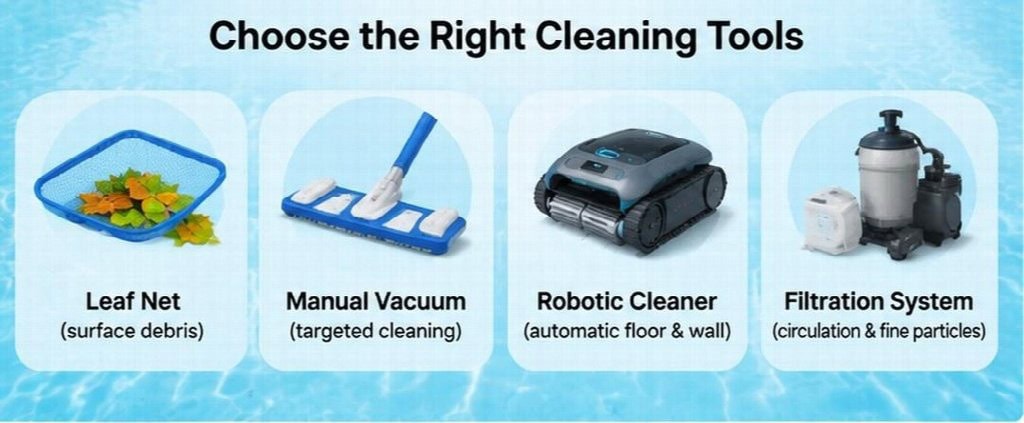
Pool-cleaning equipment should solve a specific recurring problem. A leaf net is useful for a few large items on the surface. A manual vacuum can target small patches or places automated cleaners cannot reach. The skimmer and main filtration system continue working on circulation and suspended particles. A robotic pool cleaner can automate a substantial part of brushing and collecting settled debris, but its supported zones and filters vary by model.
If the pool sits beneath trees, the daily nuisance may be floating leaves rather than floor dirt. If children frequently bring sand from the garden, fine debris and filtration may matter more. Irregular shapes, shallow benches and narrow steps also change the decision. Look at the pool after a normal summer week before buying equipment; the visible patterns will tell you more than a generic ‘best cleaner’ list.
For families considering automation, the Australian Beatbot range is one example of the available cordless robotic category. Compare cleaning coverage, filter access, retrieval and pool compatibility rather than assuming a higher-priced machine is automatically appropriate. The collection includes models designed for different cleaning zones; each model’s specifications and exclusions should be checked individually.
Three common summer situations—and how to respond
A storm drops leaves into the pool
Start with safety. Do not enter the water during lightning or unsafe weather. Once conditions settle, remove larger debris with a net and check skimmer and pump baskets. Review water clarity and chemistry before swimming resumes. A robot can help with settled debris, but heavy branches and sharp objects should be removed manually; do not put a machine into a pool where its safe operating conditions are uncertain.
A birthday party brings more swimmers than usual
Plan water testing before the event and check again as conditions warrant. Put towels, bins and a clear place for shoes near the pool so dirt does not travel straight into the water. Decide who is supervising, and do not treat a crowded pool as safer because there are many adults present. Afterward, empty baskets and clean obvious debris, then follow the pool’s water-treatment guidance.
The water looks cloudy despite regular vacuuming
Stop treating the issue as a floor-cleaning problem. Cloudiness can involve filtration, chemistry or other water-quality causes. Test the water, examine circulation and seek competent advice when the cause is unclear. Vacuuming alone cannot disinfect water or correct chemical imbalance. If the water is not clear enough to see the bottom, postpone swimming until the issue is resolved.
Make the pool area easier to maintain
A poolside storage plan can remove several small chores. Keep the leaf net within an adult’s reach, use a clearly labelled container for toys away from the fence and rinse sandy feet before entering the water. Keep chairs and storage boxes out of the fence’s climbable zone. These measures help reduce debris but do not replace testing, circulation or filtration.
A tidy equipment area matters too. Label storage, keep instructions for pumps and cleaners together, and store chemicals in their original containers in a secure place following the labels and local rules. Never mix different pool chemicals, and never place them where children can reach them. Electrical faults or repairs belong with appropriately licensed tradespeople.
When comparing ongoing tasks, separate them into three groups: what a person must check, what a piece of equipment can do, and what requires a professional. For example, a pool robot can collect leaves from some surfaces, but it cannot decide that a damaged safety gate is acceptable. This distinction keeps convenience from becoming a false sense of security.
How to spend less time cleaning without lowering standards
First, identify the job you repeat most often. If you skim every afternoon because eucalyptus leaves blow across the water, prioritise that problem. If dirt settles in the deep end, plan floor cleaning around when the pool is not being used. If the waterline gets dirty, check whether the proposed cleaner has actual waterline coverage. The aim is fewer repeated chores, not buying the greatest number of features.
Next, set realistic operating boundaries. Cordless machines still need charging, filter cleaning and safe storage. The pool should be free of swimmers when the equipment manufacturer requires it, and children should not handle powered devices or chemical products. Keep a basic manual tool available for corners or unusual debris that automation misses.
Finally, review the routine after two or three weeks. If the water is consistently clear, tests are in the required range, and the debris workload is manageable, your plan may be working. If not, change the specific weak point rather than simply running every device longer. An experienced pool technician can help assess persistent water-quality or equipment problems.
Frequently Asked Questions
How often should families test pool water in Australian summer?
Follow local public-health and pool-equipment guidance. HealthyWA advises testing chemical levels at least daily and more often in hot weather, especially free chlorine and pH. Additional checks can be appropriate after heavy use or unusual conditions.
Can a robotic cleaner replace skimming and pool chemicals?
No. Depending on its design it may collect floor debris, scrub walls or handle some floating material, but filtration, disinfectant testing, chemistry and occasional manual cleaning remain necessary.
What is the fastest way to clear leaves after a storm?
Wait until conditions are safe, remove large branches and floating debris manually, clean blocked baskets and assess the water. Only then use suitable cleaning equipment and check water quality before swimming.
Is a pool fence enough to keep young children safe?
No. A compliant, functioning barrier is an important layer of protection, but active adult supervision is essential whenever children are around water. Check your state or territory’s rules and seek qualified advice on barrier compliance.
Should a pool robot run while children are swimming?
Follow the specific cleaner’s operating manual. Many manufacturers require people to stay out of the pool while the robot operates; never assume that an autonomous cleaner is suitable for use alongside swimmers.
Enjoy the pool, but keep the essentials visible
The best summer routine makes the important work harder to overlook. Keep a named adult responsible for supervision, test the water, maintain circulation and remove debris before it builds up. Automate repetitive cleaning where the equipment genuinely fits the pool, but reserve safety and water-quality decisions for people. A manageable schedule leaves more room for swimming while keeping the responsibilities of pool ownership clear.