Razer Megasoma Review

Razer Megasoma is a hybrid of a hard and a soft mouse mat; If you love the softness of a soft mat but want to have the speed of a hard mat, Razer Megasoma delivers (this is debatable and I guess more like a personal preference). Razer Megasoma sits somewhere in between, combining the best [...]

How to uninstall Global Translator Plug-in properly


by Michael Aulia on 15 April, 2009

in Blogging


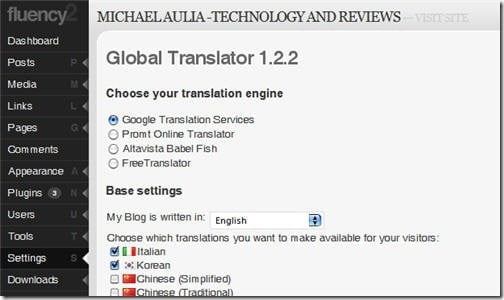
global translator plugin settings

On my previous post, I explained on why I uninstalled the Global Translator plug-in from this blog. Here is a step by step process that you should take if you want to uninstall the plug-in as well. It won’t be as simple as deactivating the plug-in from your Wordpress administration menu as Google might have already indexed your translated pages/posts.

To uninstall Global Translator Plug-in:

  1. Deactivate the plug-in from your WordPress administration (the most obvious step). This should stop the plug-in from further connecting to the translation service and translate your posts.
  2. Using your FTP program, browse to the Global Translator Cache directory on your blog. It’ll usually be under: /your_wordpress_blog_root_folder/wp-content/gt-cache/
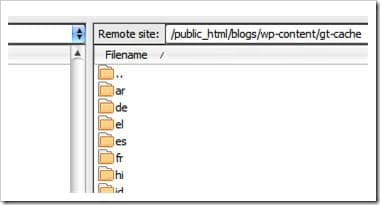
    global translator cache folders
    You should then see the languages folders (in acronyms). Keep your FTP program open because we are going to use the folder names for the next steps.
  3. Edit your robots.txt file to disallow search engine bots (especially Google) to index the translated posts/pages.
    Add the line “Disallow /[LANGUAGE_ACRONYM]/ ” where [LANGUAGE_ACRONYM] is a language on the cache directory. Add this line on EVERY language acronyms located in the gt-cache folder.
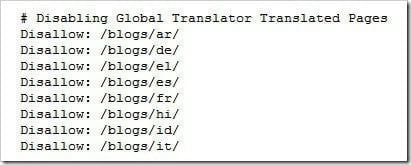
    uninstall global translator using robots.txt
  4. Use Google Webmaster Tools to request Google to permanently de-index the translated posts/pages.
    To remove the posts from Google Webmaster Tools:
    - Go to Dashboard->Tools->Remove URLs.
    - Click on the New Removal Request
    - Choose “A directory and all subdirectories on your site. Remove all files and subdirectories in a specific directory on your site from appearing in Google search results.” and then click Next.
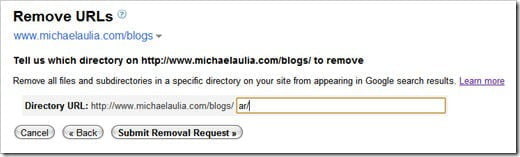
    uninstall global translator from google webmaster tools
    - Now, add one of the [LANGUAGE_ACRONYM] folder earlier and click the “Submit Removal Request” button.
    - Repeat this process until all languages have been entered and submitted for removal.
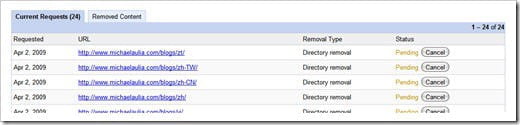
    removing global translator cache
  5. Don’t forget to remove the flag widgets from your blog if you injected the Global Translator codes manually like I do.
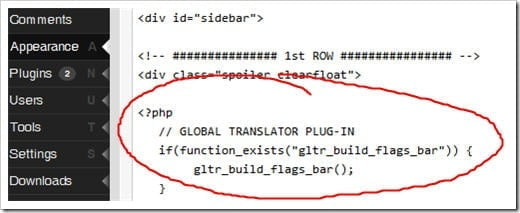
    remove Global Translator flag widgets
  6. Wait for a few days or a week until all posts have been de-indexed properly by Google and then remove the cache files (basically remove the whole gt-cache folder). The reason why this is put on the last point, is to avoid people getting 404 error which of course will reduce the credibility of your blog. Once the posts have been removed from Google, you can safely remove them.

Feel free to give more feedback on the uninstallation steps to help other bloggers who are planning to uninstall the plug-in.


Bookmark and Share


Subscribe Now

If you enjoyed this post, feel free to subscribe to be notified of new posts at Craving Tech!

{ 21 comments… read them below or add one }

Tnomeralc Web Design Toys 15 April, 2009 at 2:24 pm

Hope this post helps other guys who installed this plugin. And requesting for the removal of indexed sites doesn’t happen overnight. So I guess, it takes real amount of time.

One more thing. Is this a step by step process that can’t be re-ordered? For example, request for a removal first before deactivating and uninstalling it on your blog?

Thanks.

Ron

Tnomeralc Web Design Toys´s last blog post..Cavitenio and Cavitenia Bloggers

Reply to this comment

Michael Aulia 16 April, 2009 at 12:07 am

Hm.. well if you request a removal first, the plug-in will still translate the other posts. So yeah, it’s recommended to do it from the top to bottom

Nihar 15 April, 2009 at 4:51 pm

It is really a pain in the …

I am happy that i didn’t install this plugin at all.

Hope this helps others who have already installed and are looking to uninstall it.

Nihar´s last blog post..Find Jar files of any Java class file – FindJar.com

Reply to this comment

Michael Aulia 16 April, 2009 at 12:06 am

Yeah, like u said, Nihar.. a pain in the… :) thankfully it’s gone before it has caused enough damage

Electronic Gadgets 15 April, 2009 at 6:38 pm

Hey, great post but just see why Page Rank goes down to 0, puzzled.

Electronic Gadgets´s last blog post..Zune HD, The Next Gen Of Zunage

Reply to this comment

Megaphase.info 16 April, 2009 at 8:28 am

instead of telling google to remove the links, cant you just do a 301 redirect permanently moved on the pages that are ‘deleted’?

Megaphase.info´s last blog post..Just activated akismet

Reply to this comment

Michael Aulia 18 April, 2009 at 12:15 pm

Hm I guess we can but we aren’t supposed to keep the translated pages/posts anymore. So we must 301 redirect to the english/original posts

personal injury lawyers 16 April, 2009 at 7:23 pm

Quite help full.but i did not get why this uninstall process is so critical. this plug in should be like others.

Reply to this comment

Harsh Agrawal 18 April, 2009 at 10:59 am

Great post Michael I persoanlly wanted to write a post on how to remove Global translator plugin wordpress plugin without impacting your SEO
Since you have covered it it’s great.

I already m altered my robots.txt file to disallow crawlers and bots to index my language folder
You can see an example here
http://www.shoutmeloud.com/robots.txt
and same way I removed all the directories using Google webmaster tools.

Harsh Agrawal´s last blog post..Get recommendation for Twitter followfriday

Reply to this comment

Michael Aulia 18 April, 2009 at 12:20 pm

Thanks Harsh. The plug-in has a lot of great potentials and it did increase my traffic internationally. It’s a pity

Steve Yu 19 April, 2009 at 1:16 am

Global Translator is a great tool. But thanks to this plug, my hosting account get suspended early this month because of high cpu usage. Now, I host my blog on new host.

Steve Yu´s last blog post..How to Create Password-Protected Partition On USB Drive?

Reply to this comment

Michael Aulia 19 April, 2009 at 5:02 pm

Ouch. Lunarpages usually moves you to a temporary server until you can fix the problem (Happened to me in the past when I got massive traffic from StumbleUpon). Thankfully I installed SuperCache when I had this plug-in

Kelly 6 May, 2009 at 6:04 pm

I’m stuck. I’ve noticed a huge decline in Google traffic, ban in Yahoo and decided to quickly remove this plugin.

I started before I found your post, but I deleted the gt-cache, removed the plugin.

Yet, when I go to http://www.domain.com/it/ or any other language translation, the english version of the page shows up.

How do I remove this hook?

Reply to this comment

Michael Aulia 8 May, 2009 at 1:51 am

Hm that’s funny.. did you install any cache plug-in?

Atul 29 May, 2009 at 1:59 am

Thanks a ton for this post

Atul´s last blog post..Words Women Mostly Use

Reply to this comment

Fahad 22 November, 2009 at 10:45 am

Thanks for the detailed instructions!
This was the first time that I had used robots.txt so your instructions helped me lots.

Btw, I didn’t deactivate the plugin cause the translated pages weren’t working then. So I used robots.txt and webmaster tools to remove the translated pages from being indexed. Then i can delete the translated pages in a month or 2 when they have all been de-indexed. Newer pages translated due to the plugin still being active wont matter since they wont be indexed. This is correct, right?

Reply to this comment

Michael Aulia 24 November, 2009 at 12:09 pm

Yeah. As long as you clearly specified the exclude path in the robots.txt, then they won’t be indexed by Google :)

Fahad 2 December, 2009 at 4:29 pm

Thanks for your help! :)

Reply to this comment

Tony 22 December, 2009 at 3:10 pm

It seems kinda drastic to recommend uninstalling the Global Translator plugin, if not misleading. The same steps for uninstalling can equally be applied to properly managing the plugin to increase visitors and avoid conflicts with Google Adsense, for example.

I began an experiment along those lines by setting up the Translator again in what I consider a more practical manner. Firstly, I ensured that the languages I selected were supported by Adsense. Then I completely deleted my cache of newly translated pages and ’stale’ files. This is easily done in FTP by finding the gt-cache folder and right clicking to delete. The contents are trashed but the empty language subfolders remain to be filled up again.

Then I added ‘disallow’ lines to my robots.txt file to block Googlebot from mapping translations in languages not supported by Adsense, or which I had already deselected as language options. Incidentally, it’s a good idea to check periodically that the cached translations are in keeping with the present style of your blog. I found a couple of pages that were still displaying with a WordPress theme I had long abandoned. Incidentally, a picture banner or logo instead of a title stops the translator messing up your site’s main title.

I am n0w in the process of removing URLs from Google’s database using Webmaster Tools. This is not straightforward but not as lengthy as you might think. I believe there is an option under ‘diagnostics’ to block the route to the gt-cache folder which also removes already-indexed files. I’m still looking for the link, as I think the layout of Webmaster Tools might have changed over time. I might be an optimist but I’m sticking with Global Translator for now.

Reply to this comment

Michael Aulia 23 December, 2009 at 9:34 pm

Hi Tony,
If you go back to my other post (link on the post), you’ll find out that it’s against Google policy (not the Google AdSense) to keep the cached pages more than a certain period. Of course you can delete and regenerate it, but then again, that’s not what the policy wants. So play safe or get more traffic? It’s up to you

infini3 25 December, 2009 at 5:59 pm

I agree. Installing that plugin makes some problems in my blog. So, I also decided to uninstall it. By the way, can you check my robots file at http://infini3.co.cc/robots.txt if it is already correct? Thanks a lot.

Reply to this comment

Leave a Comment

You can use these HTML tags and attributes: <a href="" title=""> <abbr title=""> <acronym title=""> <b> <blockquote cite=""> <cite> <code> <del datetime=""> <em> <i> <q cite=""> <strike> <strong>

CommentLuv Enabled

Previous post:

Next post:


ss_blog_claim=90a03beb48f2cae080e36591e278f2e0